 Plays from Google Drive
Sing-along · Feelings & Kindness · Kindergarten
Be a Good Friend
 Dr. Lewicki, PhD · Premieres on YouTube Dec 24, 2026 · plays here now
Listen, share, be kind. Lyrics, lesson and printable: https://drlewicki.com/songs/be-a-good-friend/
Be a Good Friend is a two-minute sing-along about how to be a good friend: the chorus asks and children shout the answers. Made for kindergarten in the K-2 Sing-Alongs from Dr. Lewicki, PhD.
Parts of the song · 6
Lyrics
Press play on the video and sing along with the words below.
Chorus
Verse 1
Chorus
Verse 2
Final Chorus
Outro
Lesson · read it together
Let's learn: being a good friend
A good friend is someone who cares about you. Read this part together, act out each friendly thing.
After this lesson, children can
- Name things good friends do: listen, share, take turns and use kind words.
- Say "Are you okay?" when a friend feels sad.
- Invite someone new to play, and say sorry and mean it.
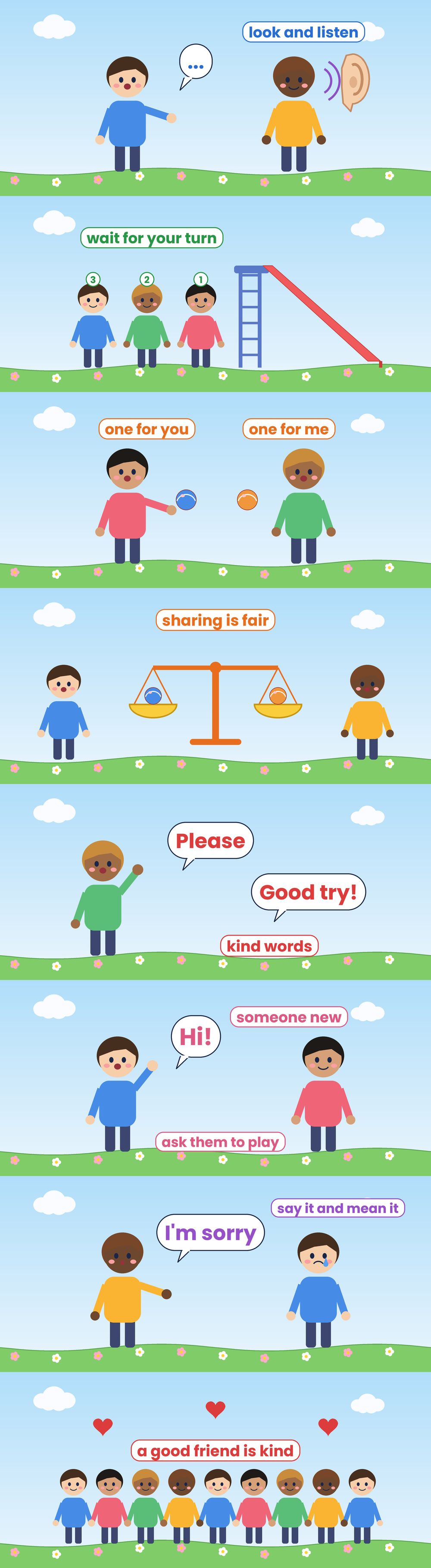
Look at your friend and hear what they say. 1Look and listen
When a friend talks, look at them and listen.
Listening shows your friend you care.
Wait for your turn to talk or to play. 2Take turns
Good friends take turns: one talks, then the other.
On the slide, everyone waits for a turn.
One for you and one for me. Sharing is fair! 3Sharing is fair
When there is only one ball, friends share.
Sharing means everyone gets a fair turn or a fair part.
Use kind words, like "Please" and "Good try." Ask someone new to play: just say hi. 4Kind words
Kind words help friends feel good: please, thank you, good try.
If someone is alone, say hi and ask them to play.
If you hurt a friend, say "I'm sorry" and mean it. 5Say sorry and mean it
Everyone makes mistakes. If you hurt a friend, say "I'm sorry" and mean it.
A good friend is kind every day.
Key words
- friend
- Someone who cares about you and plays with you.
- listen
- Pay attention to what someone says.
- share
- Let someone else use or have part of something.
- take turns
- Go one at a time.
- kind
- Gentle and caring.
Try it: what do friends do?
Listen to each one and tap what a good friend does.
- Your friend is telling you a story.Look at your friend and listen.
- There is only one ball.Share it so everyone gets to play.
- Everyone wants to go down the slide first.Wait for your turn.
- Your friend looks sad.Asking shows you care.
- Your friend wants a turn with your toy.One for you, one for me.
Quick quiz
Read each question out loud. Children call out the answer, then tap it.
1. You are talking: what do friends do?
Show the answer
Listen. Friends look and listen.
2. One ball: what do friends do?
Show the answer
Share. Sharing is fair.
3. Who goes first? What do friends do?
Show the answer
Take turns. Friends go one at a time.
4. A friend feels sad: what do friends say?
Show the answer
Are you okay? Asking shows you care.
For grown-ups: teaching this lesson
Time: 15 minutes, kindergarten.
- Play the song once all the way through.
- Read the five parts above together. Act out each part with a partner.
- Play it again. Pause before each chorus answer so the class can call it out.
- Do the what-do-friends-do game together.
- Friendship role-play: give partners a card (one ball, someone sad, someone new) and have them act out what a good friend does. Exit question: what can you say when a friend is sad?
Talk about it
- How do you feel when someone listens to you?
- What can you do if someone is playing alone at recess?
- Why is it important to mean it when you say sorry?
Standards and resources
- CASELRelationship skills: communicating effectively and developing positive relationships.
- CASELSocial awareness: demonstrating empathy and compassion.
Teach it next
For teachers
Free to use in class. Play it a few times; it's made to support what students learn in class, not replace it.
About this song
Be a Good Friend is a two-minute sing-along for kindergarten about how to be a good friend, with a drawing on screen for every line. The chorus asks and children shout the answers: You are talking: what do friends do? Listen! One ball: what do friends do? Share! Who goes first? What do friends do? Take turns! A friend feels sad: what do friends say? Are you okay? The verses show looking at a friend and listening, waiting for a turn, sharing one for you and one for me, using kind words like "Please" and "Good try," asking someone new to play, and saying "I'm sorry" after a hurt.
How to use it in class Play it once all the way through. Play it again and pause before each answer in the chorus so the class can call it out. On the third play, turn the sound down on the chorus and let them sing it.
K-2 Sing-Alongs
Posts this song's page (video, lyrics and quiz) to a class in Google Classroom.
Spot a mistake? Tell us. Every fix is listed on the Corrections page.
Check yourself
Who goes first? What do friends do? A friend feels sad: what do friends say?
Show the answer
Take turns. Are you okay?
Key terms
- how to be a good friend
- social emotional learning
- kindergarten sel
- valentines day friendship
- sing along
Lesson pack
Want a free lesson pack for this song?
A lyric sheet with section times, fill-in-the-blank with a word bank, a vocabulary list, a 10-question quiz and exit tickets, all with answer keys. Free for classroom use.
Pick “A lesson pack for one of the songs” on the form and name this song.
Song details
- Subject
- Feelings & Kindness
- Grades
- Kindergarten
- Length
- 2:05
- Topic
- Being a good friend: listening, sharing, taking turns and using kind words
- On YouTube
- Premieres Dec 24, 2026
- Collection
- K-2 Sing-Alongs
- Music style
- Bright acoustic children's folk-pop, 112 BPM major-key bounce with unhurried phrasing and held notes; warm clear female lead sings a simple narrow-range melody in dry, up-front half-spoken talk-sing, while children shout each answer after a beat of space; clear foreground vocals, chorus starts right away; strummed ukulele, handclaps, plucked upright bass and glockenspiel chimes carry the verses into a full-group final chorus and children-led outro.
- Lead vocal
- Female
- Made with
- Music made with Suno AI from lyrics written for this lesson; drawings and video by Dr. Lewicki, PhD