 Plays from Google Drive
Sing-along · Feelings & Kindness · Kindergarten
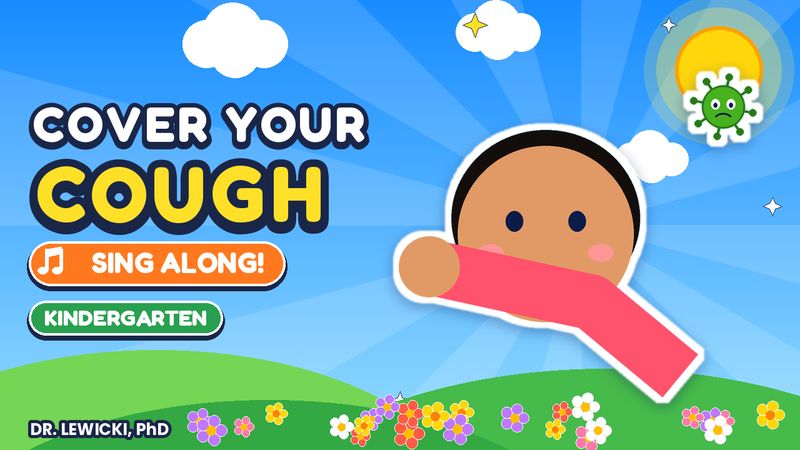
Cover Your Cough
 Dr. Lewicki, PhD · Premieres on YouTube Nov 28, 2026 · plays here now
Keep your germs away from you and me. Lyrics, lesson and printable: https://drlewicki.com/songs/cover-your-cough/
Cover Your Cough is a two-minute sing-along about covering coughs and sneezes to stop germs: the chorus asks and children shout the answers. Made for kindergarten in the K-2 Sing-Alongs from Dr. Lewicki, PhD.
Parts of the song · 6
Lyrics
Press play on the video and sing along with the words below.
Chorus
Verse 1
Chorus
Verse 2
Final Chorus
Outro
Lesson · read it together
Let's learn: covering coughs and sneezes
Coughs and sneezes spray germs, so we cover them to keep everyone healthy. Read this part together, act out each step.
After this lesson, children can
- Say that coughs and sneezes spray germs into the air.
- Cough into your elbow and sneeze into a tissue.
- Throw the tissue away and wash your hands.
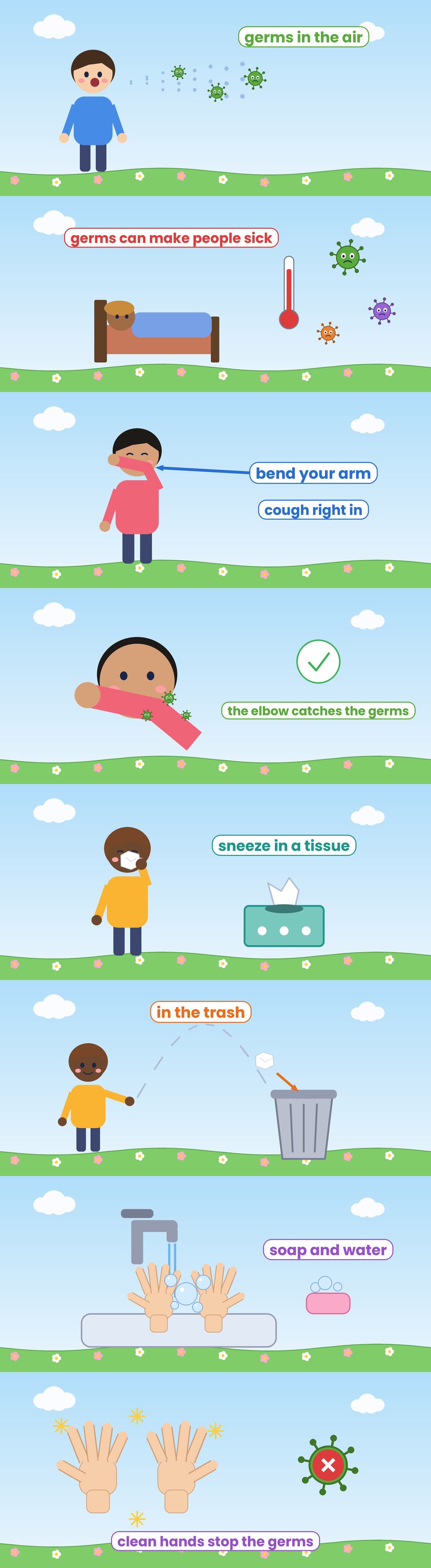
A cough or a sneeze can spray germs in the air. Germs can make people sick. 1Germs in the air
When you cough or sneeze, tiny germs spray into the air.
Germs can make other people sick, so we cover up.
I bend my arm and I cough right in. My elbow catches the germs. 2Cough in your elbow
Bend your arm and cough into your elbow.
Your elbow catches the germs, and your hands stay clean.
I grab a tissue when I have to sneeze. 3Sneeze in a tissue
When you need to sneeze, grab a tissue.
No tissue? Sneeze into your elbow.
Then into the trash it goes. 4Into the trash
Throw the used tissue in the trash right away.
Never leave it on a desk or put it in your pocket.
I wash with soap, I scrub and I rinse. Clean hands stop the germs. 5Wash your hands
After you sneeze or blow your nose, wash your hands with soap and water.
Scrub, rinse and dry: clean hands stop the germs.
Key words
- cough
- Push air out of your mouth hard.
- sneeze
- A sudden "achoo" out of your nose and mouth.
- elbow
- The middle of your arm, where it bends.
- tissue
- A soft paper for your nose.
- germs
- Tiny living things that can make us sick.
Try it: what do I do?
Listen to each one and tap the healthy choice.
- You have to cough.Cough into your elbow.
- You feel a sneeze coming and there's a tissue box.Sneeze into a tissue.
- You just used a tissue.Throw it in the trash.
- You just sneezed into a tissue and threw it away.Then wash your hands.
- You have to cough and you're holding a toy.Cough into your elbow, not your hand.
Quick quiz
Read each question out loud. Children call out the answer, then tap it.
1. Where do I cough?
Show the answer
In my elbow. Your elbow catches the germs.
2. Where do I sneeze?
Show the answer
In a tissue. A tissue catches the sneeze.
3. Where does the tissue go?
Show the answer
In the trash. Throw it away right away.
4. What do I do next?
Show the answer
Wash my hands. Wash with soap and water.
For grown-ups: teaching this lesson
Time: 15 minutes, kindergarten.
- Play the song once all the way through.
- Read the five parts above together. Act out cough, sneeze, trash and wash for each part.
- Play it again. Pause before each chorus answer so the class can call it out.
- Do the what-do-I-do game together.
- Spray test: spray water from a spray bottle (a pretend sneeze) onto paper, then again with an elbow in front of it, and compare. Exit question: where should you cough?
Talk about it
- Why is the elbow better than the hand for a cough?
- Where are the tissues and the trash can in our room?
- What do you do after you blow your nose?
Standards and resources
- NHES 1.2.1Identify that healthy behaviors affect personal health.
- NHES 7.2.1Demonstrate healthy practices and behaviors to maintain or improve personal health.
Teach it next
For teachers
Free to use in class. Play it a few times; it's made to support what students learn in class, not replace it.
About this song
Cover Your Cough is a two-minute sing-along for kindergarten about covering coughs and sneezes to stop germs, with a drawing on screen for every line. The chorus asks and children shout the answers: Where do I cough? In my elbow! Where do I sneeze? In a tissue! Where does the tissue go? In the trash! What do I do next? Wash my hands! The verses explain that a cough or a sneeze sprays germs that can make people sick, then show bending an arm to cough into the elbow, sneezing into a tissue, throwing it in the trash and washing with soap.
How to use it in class Play it once all the way through. Play it again and pause before each answer in the chorus so the class can call it out. On the third play, turn the sound down on the chorus and let them sing it.
K-2 Sing-Alongs
Posts this song's page (video, lyrics and quiz) to a class in Google Classroom.
Spot a mistake? Tell us. Every fix is listed on the Corrections page.
Check yourself
Where do I sneeze? Where does the tissue go?
Show the answer
In a tissue. In the trash.
Key terms
- cough in your elbow
- sneeze in a tissue
- cold and flu season
- kindergarten health
- sing along
Lesson pack
Want a free lesson pack for this song?
A lyric sheet with section times, fill-in-the-blank with a word bank, a vocabulary list, a 10-question quiz and exit tickets, all with answer keys. Free for classroom use.
Pick “A lesson pack for one of the songs” on the form and name this song.
Song details
- Subject
- Feelings & Kindness
- Grades
- Kindergarten
- Length
- 2:04
- Topic
- Stopping the spread of germs: cough into your elbow, sneeze into a tissue, put the tissue in the trash, then wash your hands
- On YouTube
- Premieres Nov 28, 2026
- Collection
- K-2 Sing-Alongs
- Music style
- Bright acoustic children's folk-pop, 112 BPM major-key bounce with unhurried phrasing and held notes; warm clear female lead sings a simple narrow-range melody in dry, up-front half-spoken talk-sing, while children shout each answer after a beat of space; clear foreground vocals, chorus starts right away; strummed ukulele, handclaps, plucked upright bass and glockenspiel chimes carry the verses into a full-group final chorus and children-led outro.
- Lead vocal
- Female
- Made with
- Music made with Suno AI from lyrics written for this lesson; drawings and video by Dr. Lewicki, PhD