 Plays from Google Drive
Sing-along · Feelings & Kindness · Grades K–2
New Year, Big Goals
 Dr. Lewicki, PhD · Premieres on YouTube Dec 28, 2026 · plays here now
Pick a goal, practice, and keep trying. Lyrics, lesson and printable: https://drlewicki.com/songs/new-year-big-goals/
New Year, Big Goals is a two-minute sing-along about setting a goal for the new year: the chorus asks and children shout the answers. Made for kindergarten to second grade in the K-2 Sing-Alongs from Dr. Lewicki, PhD.
Parts of the song · 6
Lyrics
Press play on the video and sing along with the words below.
Chorus
Verse 1
Chorus
Verse 2
Final Chorus
Outro
Lesson · read it together
Let's learn: setting a goal
A new year is a fresh start, and a goal is something you want to learn or do. Read this part together, share a goal of your own.
After this lesson, children can
- Say what a goal is: something you want to do or learn.
- Pick one goal and say it out loud.
- Reach a goal with practice, small steps, and trying again.
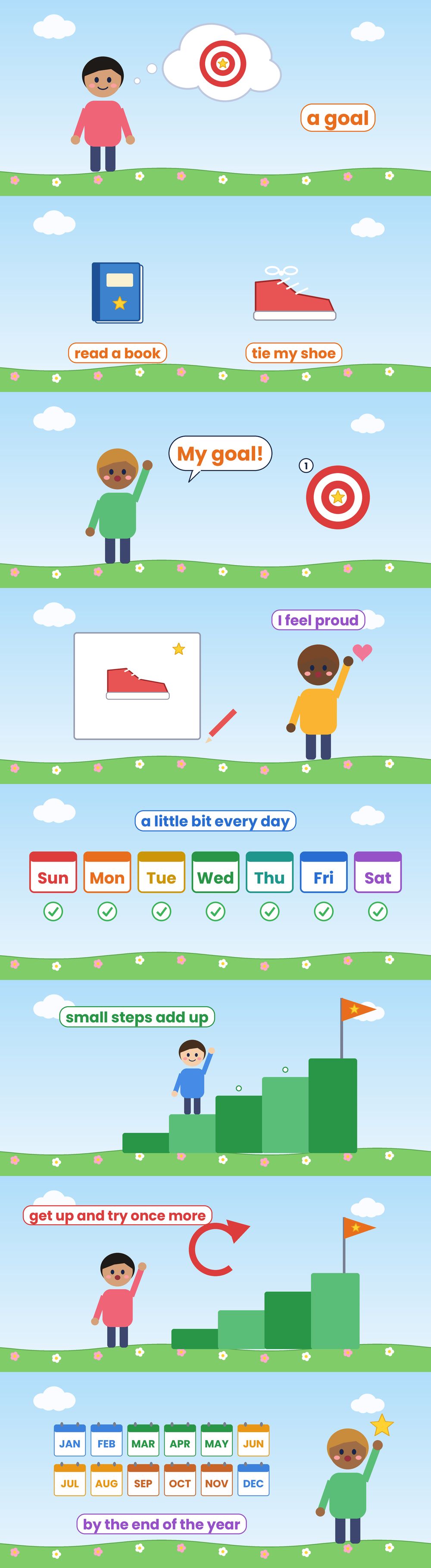
A goal is something I want to do, like read a book or tie my shoe. 1A goal
A goal is something you want to do or learn.
It can be like reading a book by yourself or tying your shoes.
I pick one goal, and I say it out loud. I draw a picture, and I feel proud. 2Say it out loud
Pick just one goal at a time.
Say it out loud and draw a picture of it. That helps you remember it.
I practice a little bit every day. 3A little every day
Practice a little every day.
Even five minutes a day adds up.
Small steps add up along the way. 4Small steps
Big goals are made of small steps.
Each step gets you a little closer.
If I slip, I get up and try once more. By the end of the year, I can do much more. 5Try once more
Everyone slips sometimes. Get up and try again.
By the end of the year, you'll be able to do so much more!
Key words
- goal
- Something you want to do or learn.
- practice
- Doing something again and again to get better.
- step
- One small part of the way to a goal.
- try again
- Keep going after a mistake.
- proud
- Happy about something you worked hard on.
Try it: goal helper or not?
Listen to each one. Does it help you reach a goal?
- Practice a little every day.Practice adds up.
- Take small steps.Small steps add up.
- Give up the first time it's hard.Keep trying!
- Say your goal out loud.Saying it helps you remember.
- Get up and try again after a slip.Everyone slips; keep going.
- Pick ten goals all at once.Pick one goal at a time.
Quick quiz
Read each question out loud. Children call out the answer, then tap it.
1. Something I want to do?
Show the answer
A goal. A goal is something you want to do.
2. What do I do when it gets hard?
Show the answer
Keep trying. Keep trying!
3. What makes me better every day?
Show the answer
Practice. Practice makes you better.
4. How do I get there?
Show the answer
Small steps. Small steps add up.
For grown-ups: teaching this lesson
Time: 15 minutes, kindergarten to second grade.
- Play the song once all the way through.
- Read the five parts above together. Share one goal of your own after each part.
- Play it again. Pause before each chorus answer so the class can call it out.
- Do the goal-helper game together.
- Goal ladder: each child draws a goal at the top of a paper ladder and three small steps below it, then colors a rung each time they practice. Exit question: what do you do when it gets hard?
Talk about it
- What is one goal you have this year?
- What small step could you take this week?
- Tell about a time you kept trying and got better.
Standards and resources
- CASELSelf-management: setting personal and collective goals.
- CASELSelf-management: exhibiting self-discipline and self-motivation.
Teach it next
For teachers
Free to use in class. Play it a few times; it's made to support what students learn in class, not replace it.
About this song
New Year, Big Goals is a two-minute sing-along for kindergarten to second grade about setting a goal for the new year, with a drawing on screen for every line. The chorus asks and children shout the answers: Something I want to do? A goal! What do I do when it gets hard? Keep trying! What makes me better every day? Practice! How do I get there? Small steps! The verses explain that a goal is something you want to do, like reading a book or tying a shoe, then show picking one goal, saying it, drawing it, practicing a little every day, taking small steps and trying again after a slip.
How to use it in class Play it once all the way through. Play it again and pause before each answer in the chorus so the class can call it out. On the third play, turn the sound down on the chorus and let them sing it.
K-2 Sing-Alongs
Posts this song's page (video, lyrics and quiz) to a class in Google Classroom.
Spot a mistake? Tell us. Every fix is listed on the Corrections page.
Check yourself
What do I do when it gets hard? How do I get there?
Show the answer
Keep trying. Small steps.
Key terms
- social emotional learning
- kindergarten sel
- practice makes progress
- sing along
Lesson pack
Want a free lesson pack for this song?
A lyric sheet with section times, fill-in-the-blank with a word bank, a vocabulary list, a 10-question quiz and exit tickets, all with answer keys. Free for classroom use.
Pick “A lesson pack for one of the songs” on the form and name this song.
Song details
- Subject
- Feelings & Kindness
- Grades
- K–2
- Length
- 2:05
- Topic
- Setting a goal: a goal is something you want to do; pick one, say it, practice a little every day, take small steps, and keep trying when it is hard
- On YouTube
- Premieres Dec 28, 2026
- Collection
- K-2 Sing-Alongs
- Music style
- Bright acoustic children's folk-pop, 112 BPM major-key bounce with unhurried phrasing and held notes; warm clear female lead sings a simple narrow-range melody in dry, up-front half-spoken talk-sing, while children shout each answer after a beat of space; clear foreground vocals, chorus starts right away; strummed ukulele, handclaps, plucked upright bass and glockenspiel chimes carry the verses into a full-group final chorus and children-led outro.
- Lead vocal
- Female
- Made with
- Music made with Suno AI from lyrics written for this lesson; drawings and video by Dr. Lewicki, PhD