 Plays from Google Drive
Sing-along · Feelings & Kindness · Kindergarten
Ready to Learn
 Dr. Lewicki, PhD · Premieres on YouTube Dec 19, 2026 · plays here now
Eyes watching, ears listening, a quiet mouth and a calm body: ready to learn! Lyrics, lesson and printable: https://drlewicki.com/songs/ready-to-learn/
Ready to Learn is a two-minute sing-along about being ready to learn: eyes on the teacher, ears listening, a quiet mouth while someone talks, sitting tall with hands in the lap and feet still, a pencil ready, and raising a hand to ask a question. The chorus asks and children shout the answers. Made for kindergarten in the K-2 Sing-Alongs from Dr. Lewicki, PhD.
Parts of the song · 6
Lyrics
Press play on the video and sing along with the words below.
Chorus
Verse 1
Chorus
Verse 2
Final Chorus
Outro
Lesson · read it together
Let's learn: ready to learn
Being ready to learn means eyes on the teacher, ears listening, a quiet mouth while someone talks, sitting tall with hands in your lap and feet still, a pencil ready, and raising your hand to ask a question. Read this part together, show each step with your body.
After this lesson, children can
- Show what eyes, ears, mouth and body do when we are ready to learn.
- Sit tall with hands in the lap and feet still.
- Raise a hand and wait for a turn to talk.
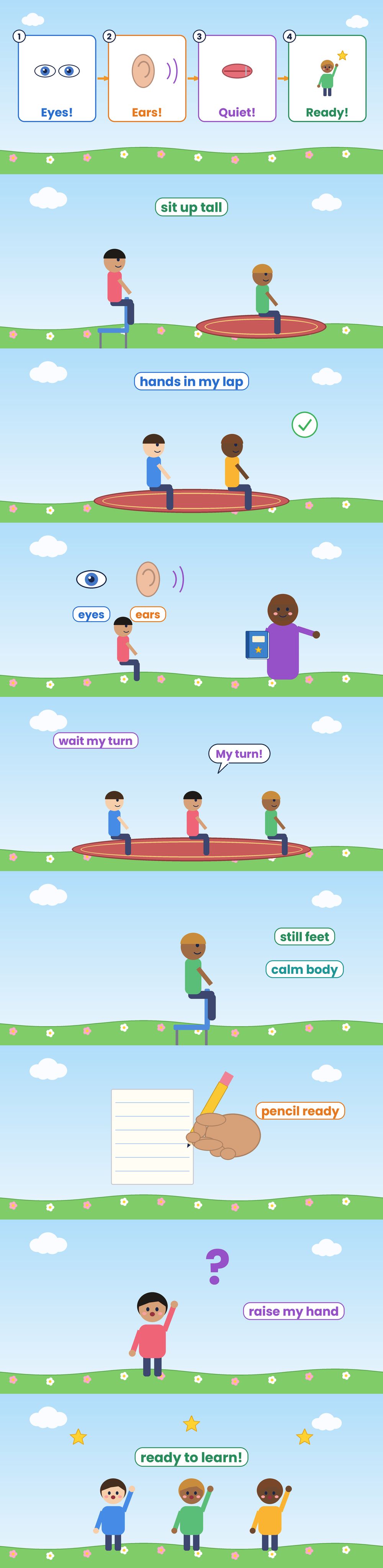
Eyes, ears, quiet, ready. 1Here is the test
My eyes look and my ears listen.
My mouth is quiet, and I am ready.
Sit tall, hands in my lap. 2Sit up tall
I sit up tall on my chair or the rug.
My hands stay in my lap.
Eyes watch, ears hear, I wait my turn. 3Watch and wait
My eyes watch the teacher, and my ears hear each word.
I wait for my turn so my voice can be heard.
Still feet, pencil ready. 4Calm and ready
My feet are still and my body is calm.
My pencil is ready in my hand.
Raise a hand to ask. 5Raise my hand
If I have a question, I raise my hand high.
I'm ready to learn and ready to try.
Key words
- ready
- Set to start, with body and brain paying attention.
- listen
- To use your ears and think about what you hear.
- quiet
- Not talking or making noise.
- calm
- Still and relaxed, not wiggly.
- turn
- Your time to talk or play, after waiting.
Try it: ready or not ready?
Listen to each one. Is the child ready to learn?
- Kai looks at the teacher.Eyes on the teacher means ready.
- Lily talks while the teacher talks.A quiet mouth helps everyone hear.
- Ben raises his hand to ask.Raising a hand is how we ask.
- Zoe kicks her feet and wiggles.Still feet and a calm body are ready.
- Sam holds his pencil, ready to write.A pencil ready means ready to work.
Quick quiz
Read each question out loud. Children call out the answer, then tap it.
1. Who is looking at the teacher? My?
Show the answer
eyes. Eyes look at the teacher.
2. Who is listening close? My?
Show the answer
ears. Ears listen.
3. While the teacher talks, my mouth stays?
Show the answer
quiet. A quiet mouth helps us hear.
4. If I have a question, I?
Show the answer
raise my hand. We raise a hand and wait.
For grown-ups: teaching this lesson
Time: 10 to 15 minutes, kindergarten.
- Play the song once all the way through.
- Read the five parts above together. Have children show each step with their bodies as you read it.
- Play it again. Pause before each chorus answer so the class can call it out.
- Do the ready or not ready game together.
- Play "Ready check": call out "Eyes!", "Ears!", "Quiet!", "Ready!" and children show each one. Exit question: what do you do when you have a question?
Talk about it
- Why is it hard to learn when everyone talks at once?
- What helps your body feel calm?
- How does it feel when someone listens to you?
Standards and resources
- CASEL Self-managementManage emotions, thoughts and behaviors in different situations, including using calming strategies.
- SL.K.1.aFollow agreed-upon rules for discussions (e.g., listening to others and taking turns speaking about the topics and texts under discussion).
Teach it next
For teachers
Free to use in class. Play it a few times; it's made to support what students learn in class, not replace it.
About this song
Ready to Learn is a two-minute sing-along for kindergarten about being ready to learn: eyes on the teacher, ears listening, a quiet mouth while someone talks, sitting tall with hands in the lap and feet still, a pencil ready, and raising a hand to ask a question, with a drawing on screen for every line. The chorus asks and children shout the answers: Who's looking at the teacher? My? Eyes! Who's listening close? My? Ears! While the teacher talks, my mouth stays? Quiet! Now my body and brain are? Ready! The verses show children sitting tall on a chair and on the rug with hands in their laps, eyes and ears on the teacher, a child waiting for a turn to talk, still feet and a calm body, a hand holding a pencil, a raised hand with a question, and happy children ready to learn.
How to use it in class Play it once all the way through. Play it again and pause before each answer in the chorus so the class can call it out. On the third play, turn the sound down on the chorus and let them sing it.
K-2 Sing-Alongs
Posts this song's page (video, lyrics and quiz) to a class in Google Classroom.
Spot a mistake? Tell us. Every fix is listed on the Corrections page.
Check yourself
What do our eyes do when the teacher talks? What do we do if we have a question?
Show the answer
Watch the teacher. Raise our hand.
Key terms
- kindergarten classroom routines
- classroom expectations
- sing along
Lesson pack
Want a free lesson pack for this song?
A lyric sheet with section times, fill-in-the-blank with a word bank, a vocabulary list, a 10-question quiz and exit tickets, all with answer keys. Free for classroom use.
Pick “A lesson pack for one of the songs” on the form and name this song.
Song details
- Subject
- Feelings & Kindness
- Grades
- Kindergarten
- Length
- 2:05
- Topic
- Ready to learn: eyes on the teacher, ears listening, a quiet mouth, sitting tall with hands in my lap and feet still, raising my hand to ask, ready to try
- On YouTube
- Premieres Dec 19, 2026
- Collection
- K-2 Sing-Alongs
- Made with
- Music made with Suno AI from lyrics written for this lesson; drawings and video by Dr. Lewicki, PhD