 Plays from Google Drive
Sing-along · Science & Nature · Grades K–1
The Four Seasons
 Dr. Lewicki, PhD · Premieres on YouTube Nov 29, 2026 · plays here now
Spring, summer, fall, winter: around and around, four seasons a year. Lyrics, lesson and printable: https://drlewicki.com/songs/the-four-seasons/
The Four Seasons is a two-minute sing-along about the seasons in order: the chorus asks what comes after each season and children shout the answers (spring, summer, fall, winter). Made for grades K-1 in the K-2 Sing-Alongs from Dr. Lewicki, PhD.
Parts of the song · 6
Lyrics
Press play on the video and sing along with the words below.
Chorus
Verse 1
Chorus
Verse 2
Final Chorus
Outro
Lesson · read it together
Let's learn: the four seasons
There are four seasons, and they always come in the same order: spring, summer, fall and winter. Read this part together, say what comes next.
After this lesson, children can
- Name the four seasons in order: spring, summer, fall, winter.
- Describe what each season is like.
- Say that the seasons go around again every year.
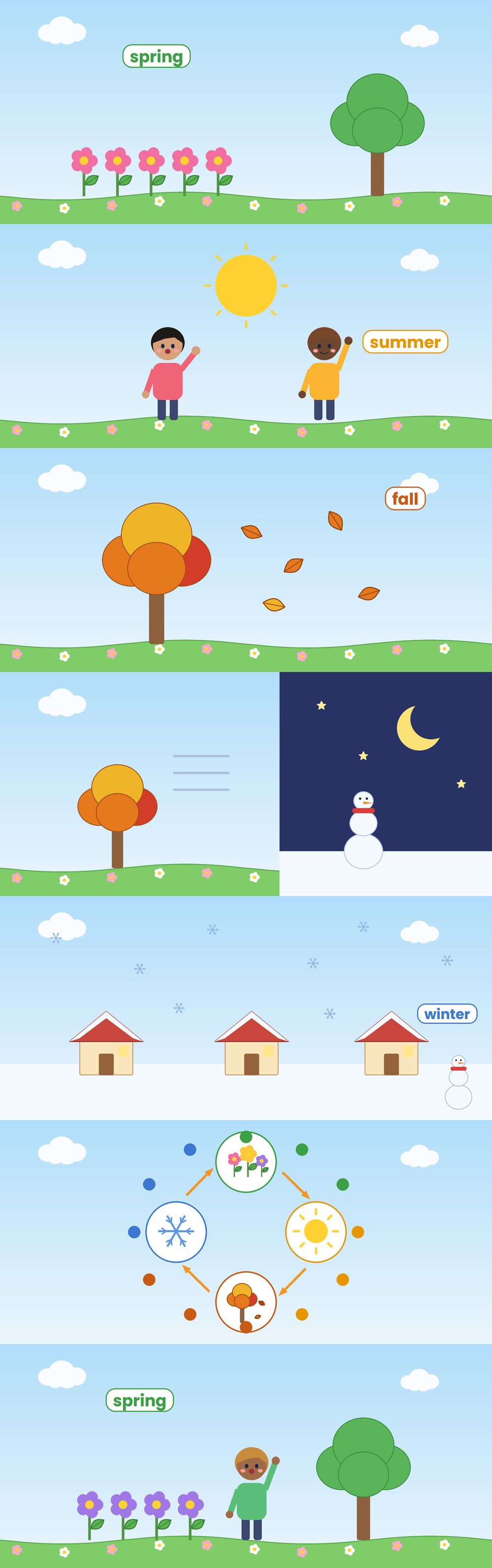
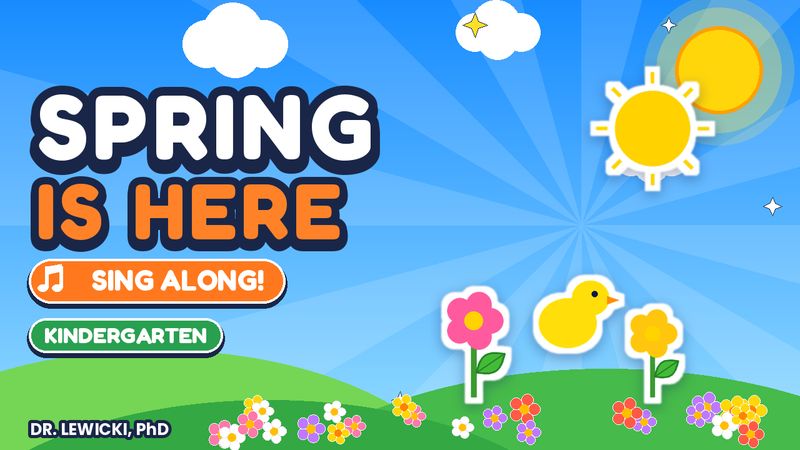
In spring, the flowers and the green buds grow. 1Spring
Spring comes after winter.
Flowers bloom, buds open and the weather warms up.
In summer it's hot, and the long days glow. 2Summer
Summer comes after spring.
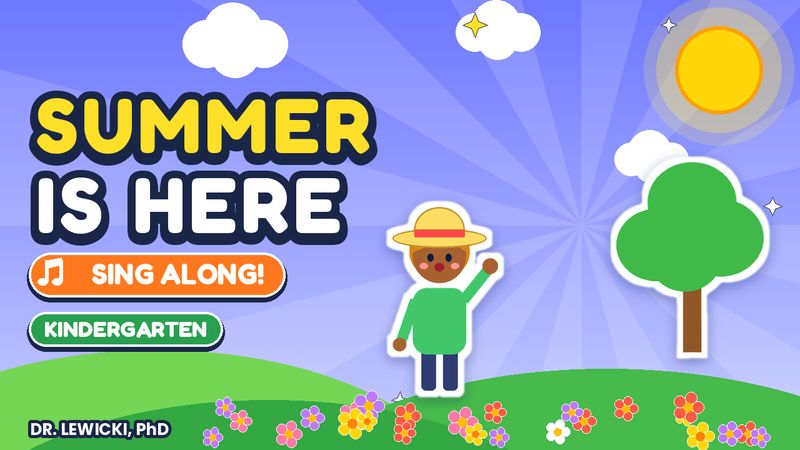
It is the hottest season, with long, sunny days.
In fall, the leaves come tumbling down. 3Fall
Fall comes after summer. It's also called autumn.
Many leaves turn colors and fall, and the air gets cooler.
In winter, snow can cover the town. 4Winter
Winter comes after fall.
It is the coldest season, with short days and long nights. In many places it snows.
Four seasons, twelve months, one whole year. Then spring comes back! 5Around and around
Four seasons make one year.
After winter, spring comes back, and the seasons go around again.
Key words
- season
- One of the four parts of the year.
- spring
- The season when plants start to grow.
- summer
- The hottest season.
- fall
- The season when leaves fall. Also called autumn.
- winter
- The coldest season.
Try it: which season?
Listen to each clue and tap the season.
- Flowers bloom and buds open.Spring flowers.
- It's hot, and we swim at the pool.Hot summer days.
- Leaves turn orange and fall down.Falling leaves.
- It's cold and snowy.Cold winter.
- Pumpkins are ready to pick.Pumpkins ripen in fall.
- Baby chicks hatch.Many babies are born in spring.
Quick quiz
Read each question out loud. Children call out the answer, then tap it.
1. What comes after winter?
Show the answer
Spring. Spring comes after winter.
2. What comes after spring?
Show the answer
Summer. Summer comes after spring.
3. What comes after summer?
Show the answer
Fall. Fall comes after summer.
4. What comes after fall?
Show the answer
Winter. Winter comes after fall.
For grown-ups: teaching this lesson
Time: 15 minutes, kindergarten and first grade.
- Play the song once all the way through.
- Read the five parts above together. Point to each season's picture and say what comes next.
- Play it again. Pause before each chorus answer so the class can call it out.
- Do the which-season game together.
- Season wheel: fold a paper plate into four parts and draw one season in each, in order. Spin it and say what comes next. Exit question: what season comes after fall?
Talk about it
- What season is it now? What comes next?
- What do you wear in each season?
- What's your favorite season, and why?
Standards and resources
- K-ESS2-1Use and share observations of local weather conditions to describe patterns over time.
- 1-ESS1-2Make observations at different times of year to relate the amount of daylight to the time of year.
Teach it next
For teachers
Free to use in class. Play it a few times; it's made to support what students learn in class, not replace it.
About this song
The four seasons in order, in a two-minute sing-along for kindergarten and first grade, with a drawing on screen for every line. The chorus asks and children shout the answers: what comes after winter? Spring! After spring? Summer! After summer? Fall! After fall? Winter! The verses show each season (flowers and buds, hot sunny days, falling leaves, snow on the town) and how the year goes around: four seasons, twelve months, one whole year.
How to use it in class Play it once all the way through. Play it again and pause before each answer in the chorus so the class can call it out. On the third play, turn the sound down on the chorus and let them sing it.
K-2 Sing-Alongs
Posts this song's page (video, lyrics and quiz) to a class in Google Classroom.
Spot a mistake? Tell us. Every fix is listed on the Corrections page.
Check yourself
What comes after fall? What comes after winter?
Show the answer
Winter comes after fall, and spring comes after winter.
Key terms
- spring summer fall winter
- seasons in order
- kindergarten science
- sing along
Lesson pack
Want a free lesson pack for this song?
A lyric sheet with section times, fill-in-the-blank with a word bank, a vocabulary list, a 10-question quiz and exit tickets, all with answer keys. Free for classroom use.
Pick “A lesson pack for one of the songs” on the form and name this song.
Song details
- Subject
- Science & Nature
- Grades
- K–1
- Length
- 2:05
- Topic
- The four seasons in order: spring, summer, fall, winter
- On YouTube
- Premieres Nov 29, 2026
- Collection
- K-2 Sing-Alongs
- Music style
- bright acoustic children's folk-pop, the song starts straight on the chorus, ukulele, handclaps, upright bass, glockenspiel, 112 BPM, warm clear female lead on a simple narrow-range melody, a group of children shout each answer after a beat of space, unhurried phrasing, held notes, major key, clear foreground vocals
- Lead vocal
- Female
- Made with
- Music made with Suno AI from lyrics written for this lesson; drawings and video by Dr. Lewicki, PhD